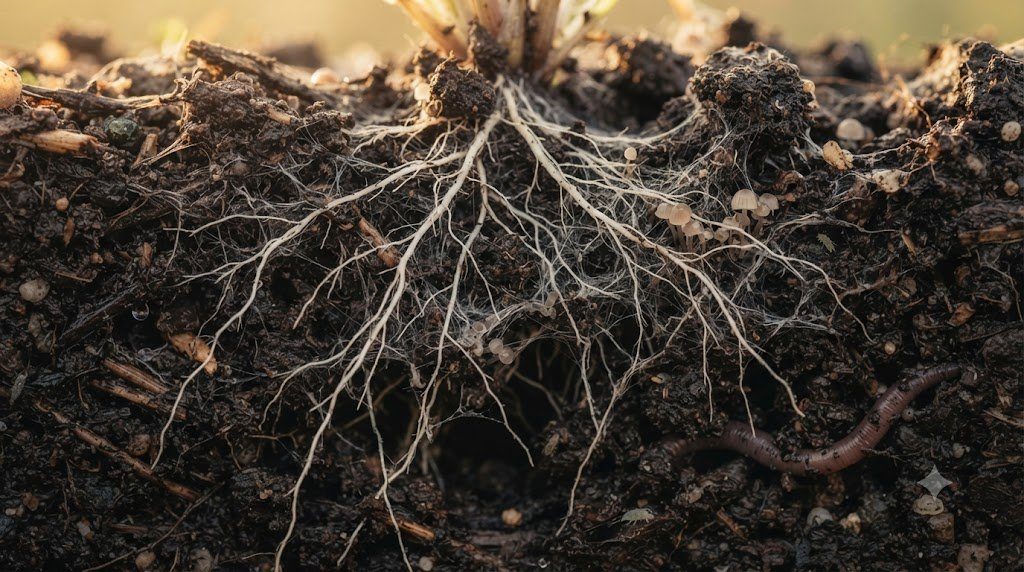
🪱 Subterranean Biological Control Monograph
This dissertation explores the biological suppression of soil-borne pathogens and subterranean insect larvae. We examine entomopathogenic nematodes (Steinernema carpocapsae, Heterorhabditis bacteriophora) and their symbiotic insecticidal bacteria (Xenorhabdus, Photorhabdus), alongside brassica biofumigation glucosinolate dynamics and suppressive soil ecology.
While foliar pests and canopy diseases are immediately visible to the scouting agronomist, some of the most catastrophic agricultural crop losses occur silently beneath the soil surface. Subterranean insect pests—such as root-knot nematodes (Meloidogyne spp.), wireworms (Elateridae larvae), root grubs (Scarabaeidae), white grubs, and cabbage root maggots (Delia radicum)—feed destructively on crop root systems, severing taproots, boring vascular tunnels, and creating entry wounds that invite devastating vascular wilt pathogens (such as Fusarium oxysporum, Verticillium dahliae, and Rhizoctonia solani).
In conventional agriculture, growers manage subterranean threats by injecting broad-spectrum synthetic chemical soil fumigants (such as metam sodium, chloropicrin, and 1,3-dichloropropene) into the earth. These lethal chemical fumigants sterilize the soil biome, leaving an ecological vacuum that rapidly re-infests with aggressive super-pathogens. Organic agriculture approaches subterranean disease through biological warfare and suppressive soil engineering: deploying microscopic entomopathogenic nematodes armed with symbiotic insect-killing bacteria, engineering high-glucosinolate brassica biofumigation cover crops, and building a living subterranean soil food web that actively hunts and consumes root pests.
1. Biology of Entomopathogenic Nematodes: Steinernema and Heterorhabditis
Entomopathogenic nematodes (EPNs) are microscopic, unsegmented roundworms that live naturally in soils worldwide. Unlike plant-parasitic nematodes (which feed on living plant roots), entomopathogenic nematodes are obligate carnivores that specifically target and kill soil-dwelling insect larvae, grubs, and pupae. Two primary taxonomic families dominate agricultural biocontrol:
1. Family Steinernematidae (predominantly Steinernema carpocapsae and S. feltiae): Steinernematid nematodes are ‘ambush’ or ‘intermediate’ predators. They possess specialized behavioral strategies suited for controlling surface-dwelling and upper-soil pests. Steinernema feltiae, for instance, operates exceptionally well in cool soils (down to 10°C / 50°F), making it the premier biological control agent against fungus gnat larvae (Sciaridae) and thrips pupae in nursery potting benches and early spring beds.
2. Family Heterorhabditidae (predominantly Heterorhabditis bacteriophora): Heterorhabditid nematodes are aggressive ‘cruiser’ predators. Responding to carbon dioxide emissions, subterranean vibrations, and chemical excretions released by target grubs, H. bacteriophora actively migrates deep through the soil profile (down to 30 to 45 cm), hunting white grubs, Japanese beetle larvae, black vine weevils, and root-boring caterpillars.
| Nematode Species | Predatory Hunting Strategy | Optimum Soil Temperature Range | Primary Target Subterranean Pests | Target Soil Depth |
|---|---|---|---|---|
| Steinernema feltiae | Ambush / Intermediate Cruiser | 10°C – 25°C (50°F – 77°F; Cold-tolerant) | Fungus Gnat larvae, Western Flower Thrips pupae, Shore flies | Upper 0 – 5 cm (Surface layer & Potting mix) |
| Steinernema carpocapsae | Strict Ambush (Nictating on soil particles) | 18°C – 30°C (64°F – 86°F) | Cutworms, Armyworms, Flea Beetle larvae, Webworms | Upper 2 – 8 cm |
| Heterorhabditis bacteriophora | Active Deep Cruiser (Chemical chemotaxis) | 20°C – 32°C (68°F – 90°F) | White Grubs, Japanese Beetle grubs, Root Weevils, Wireworms | Deep 5 – 35+ cm (Root zone) |
| Steinernema kraussei | Cold-active Ambush | 5°C – 20°C (41°F – 68°F; Ultra cold-adapted) | Black Vine Weevil larvae, Cold-season root maggots | Upper 5 – 15 cm in early spring / late autumn |
2. Symbiotic Lethality: The Xenorhabdus and Photorhabdus Mechanism
The lethal efficiency of entomopathogenic nematodes relies on an extraordinary obligate symbiosis with enteric bacteria carried inside the nematode’s gut. Steinernema species carry symbiotic bacteria of the genus Xenorhabdus, while Heterorhabditis species carry bioluminescent bacteria of the genus Photorhabdus.
The infection cycle is executed with surgical precision:
- Infiltration: The infective juvenile (IJ) stage of the nematode enters the target insect larva through natural body openings: the mouth, spiracles (breathing pores), or anus. Heterorhabditis juveniles also possess an anterior dorsal tooth that allows them to pierce directly through the soft intersegmental cuticle of the grub.
- Bacterial Release: Once inside the insect’s hemolymph (bloodstream), the nematode regurgitates its symbiotic bacteria (Xenorhabdus or Photorhabdus).
- Septicemia and Toxemia: The bacteria multiply exponentially in the nutrient-rich hemolymph, releasing powerful toxins, immunosuppressive factors, and digestive enzymes. The insect host dies of rapid bacterial septicemia within 24 to 48 hours.
- Bioconversion & Multiplication: The bacteria digest the insect’s internal tissues, converting them into a sterile, nutritious biological soup. The nematodes feed on this bacterial-rich soup, mature into adults, and reproduce through several generations inside the insect cadaver.
- Emergence: When the food supply is exhausted after 10 to 14 days, up to 100,000 to 300,000 new infective juvenile nematodes emerge from the ruptured insect cuticle, swarming into the surrounding soil to hunt new insect hosts.
💡 Microbiology Diagnostic: Bioluminescent Cadavers
Insect larvae killed by Heterorhabditis bacteriophora turn a distinctive brick-red or mahogany color and exhibit faint bioluminescence (glowing in total darkness). This luminescence is caused by the luciferase enzymes synthesized by Photorhabdus luminescens bacteria, confirming successful biological parasitism in field trials.
3. Brassica Biofumigation: Glucosinolates and Isothiocyanate Gas
Beyond entomopathogenic nematodes, the organic grower can deploy nature’s own chemical fumigation through the strategic cultivation of high-glucosinolate biofumigant cover crops. Specialized cultivars of mustard (such as brown mustard, Brassica juncea, and white mustard, Sinapis alba) synthesize high concentrations of sulfur-rich secondary metabolites known as glucosinolates (specifically sinigrin).
The biofumigation process is an enzymatic reaction analogous to the detonate-on-demand chemistry of a biological weapon:
Glucosinolates are stored safely inside the vacuoles of plant cells, while a specialized enzyme—myrosinase—is stored separately within plant cell walls. As long as the plant tissue remains intact, no chemical reaction occurs. However, when the mature mustard crop is shredded through mechanical flail mowing at 100% bloom, the plant cells are pulverized, bringing the glucosinolates into intimate contact with the myrosinase enzymes in the presence of water.
This enzymatic hydrolysis rapidly converts glucosinolates into volatile allyl isothiocyanates (AITC). Isothiocyanate is the exact same active chemical molecule found in conventional synthetic metam sodium fumigants. The released AITC gas diffuses through the soil pore matrix, lethally disrupting the cell membranes and respiratory enzymes of fungal resting structures (such as verticillium microsclerotia, fusarium chlamydospores, and rhizoctonia mycelium) while suppressing parasitic root-knot nematode populations by over 75%.
4. Mechanical Execution of Biofumigation: Shredding and Water Sealing
Biofumigation will fail completely if treated as a standard cover crop incorporation. Because isothiocyanate is a volatile gas, it will rapidly evaporate into the atmosphere within minutes if the soil is not properly managed. Commercial organic biofumigation requires strict adherence to the following four-step protocol:
- Step 1: High Biomass Cultivation: Grow the biofumigant mustard to maximum vegetative biomass, timing termination precisely when the field reaches 80% to 100% full bloom, when glucosinolate concentration within plant tissues peaks.
- Step 2: Microscopic Pulverization: Use a high-speed tractor-mounted flail mower (not a rotary bush hog). The flail mower’s spinning knives must shatter the mustard stems into fine, macerated particles, maximizing the cellular rupture that triggers enzymatic conversion.
- Step 3: Immediate Incorporation: A rotary tiller or heavy disc harrow must follow immediately behind the flail mower (ideally within 15 to 30 minutes). Incorporate the green slurry 15 to 20 cm deep into the soil profile.
- Step 4: The Water Seal (Irrigation Packing): Immediately following incorporation, roll the soil with a heavy smooth cultipacker roller and apply 15 to 25 mm of overhead sprinkler irrigation. The water saturates the top 2 centimeters of soil, forming an impermeable ‘water cap’ that traps the rising isothiocyanate gases within the root zone for 7 to 10 days, ensuring thorough biological fumigation.
5. Suppressive Soils: Fostering General and Specific Pathogen Resistance
The ultimate goal of organic soil disease management is the development of naturally ‘disease-suppressive soils.’ In a disease-suppressive soil, a pathogen is introduced, and a susceptible host plant is present, yet the disease fails to develop or cause significant economic harm.
Disease suppression is governed by two complementary biological mechanisms:
1. General Suppression: Driven by total microbial biomass and biological activity. By regularly amending soils with mature thermophilic compost, cover crops, and diverse organic matter, the grower sustains billions of saprophytic bacteria and fungi per gram of soil. When a pathogenic fungal spore (such as Pythium) attempts to germinate, it encounters intense biological competition: trillions of beneficial microbes consume all available root exudates, carbon, and oxygen within seconds, starving the pathogen before it can infect the plant.
2. Specific Suppression: Driven by specialized antagonistic microorganisms, specifically beneficial actinobacteria (Streptomyces) and non-pathogenic Fusarium strains that colonize root cortical tissues, secreting siderophores (iron-chelating molecules) that starve competing pathogenic fungi of essential iron. By eliminating toxic chemical fumigants and feeding the living subterranean food web, the organic farm constructs a permanent, self-regulating biological defense system that keeps cash crops thriving and disease-free from the roots up.
6. Step-by-Step Integrated Pest Management Field Execution Protocol
Implementing a comprehensive organic Integrated Pest Management (IPM) program across commercial acreage demands disciplined execution, continuous biological scouting, and strict spray calibration. Agronomists must follow a structured five-stage field protocol:
- Early-Season Habitat Pre-Establishment: Plant multi-species flowering insectary borders (sweet alyssum, dill, fennel, cosmos) and perennial bunchgrass beetle banks a minimum of 30 to 45 days prior to transplanting cash crops. Establishing floral nectar and overwintering refuges early guarantees that resident predatory insect populations are fully mobilized before pest vectors arrive.
- Standardized Weekly Field Scouting: Execute scouting at least once per week (increasing to twice weekly during peak summer heat). Traverse fields in a standardized ‘W-pattern,’ scouting 20 random plants per management block using 10x field loupes, beat sheets, and yellow/blue sticky cards to record pest-to-predator ratios.
- Deploying Physical Exclusion Barriers: In high-pressure flea beetle and cabbage root maggot zones, install floating insect netting (such as ProtekNet 25-mesh or 35-mesh) directly over wire hoops immediately following seeding or transplanting. Bury the edges completely with soil to create an impenetrable mechanical barrier during vulnerable juvenile growth stages.
- Biological Release and Habitat Synchronization: When scouting detects early-stage aphid or mite hotspots that exceed action thresholds, release commercially reared beneficial biologicals (such as predatory mites or lacewing larvae) in the late evening, targeting release directly onto hot spot canopies.
- Targeted Organic Curative Interventions: If biological and physical controls fail to suppress pests below the Economic Injury Level, deploy OMRI-approved botanical biopesticides (azadirachtin, natural pyrethrins, insecticidal soaps) exclusively as a surgical, targeted last resort. Calibrate spray equipment to 40 PSI, ensuring complete coverage of leaf undersides while avoiding daylight foraging windows of native pollinators.
7. Organic Pest Diagnostic Matrix: Identifying and Countering Crop Threats
The following diagnostic matrix provides field identification, biological mechanisms, and certified organic management protocols for major agricultural pest vectors:
| Agricultural Pest Vector | Primary Morphological Symptom | Underlying Crop Damage | Biological / Beneficial Control | Approved Organic Botanical Intervention |
|---|---|---|---|---|
| Flea Beetles (Phyllotreta spp.) | Shot-hole perforations across brassica cotyledons and leaves | Severe photosynthetic reduction; seedling death | Braconid micro-wasps; predatory ground beetles | Floating insect netting; kaolin clay barrier (Surround); neem extract |
| Cabbage Looper / Armyworm | Ragged feeding holes; abundant dark green frass pellets | Complete defoliation; unmarketable head contamination | Trichogramma wasps; parasitic tachinid flies | Bacillus thuringiensis kurstaki (Bt); spinosad (Entrust) |
| Two-Spotted Spider Mite | Fine stippling, chlorosis, and dense webbing on leaf undersides | Cellular sap depletion; premature leaf desiccation | Predatory mites (Phytoseiulus persimilis, N. californicus) | Horticultural insecticidal soap; micronized sulfur (avoid with oils) |
| Root-Knot Nematodes | Swollen galls, stunted root branching, sudden midday wilt | Vascular root destruction; vascular fungal entry | Beneficial nematophagous fungi; chitin crab meal | Entomopathogenic nematodes; brassica biofumigation cover crop |
8. The Evolutionary Resilience of Biological Agroecosystems
The fundamental flaw of chemical pest control is the evolutionary inevitability of pesticide resistance. When a synthetic neurotoxic chemical is sprayed across a monoculture, 99% of the pest population may perish, but the 1% possessing natural genetic mutations that detoxify the chemical survive. Within several generations, the entire pest population becomes genetically immune to the chemical, requiring higher doses and more toxic chemical formulations in an unwinnable, escalating evolutionary arms race.
Biological pest management completely circumvents this evolutionary dead-end. A predatory ladybug, hoverfly larva, or entomopathogenic nematode is not a static chemical molecule; it is a living, evolving predator that adapts in real time to the behaviors and defenses of its prey. In a biologically diverse organic agroecosystem, pests are subjected to multi-tiered, multi-directional pressures: predatory insects hunt them in the canopy, entomopathogenic nematodes hunt them in the soil, beneficial biofungicides compete with pathogens on leaf surfaces, and companion plant volatiles disorient their sensory navigation. In such an ecosystem, pests can never achieve single-mutation resistance, ensuring permanent, self-regulating biological harmony for the organic farm.